Available courses

Register for Science, Religion, and the Bahá’í Faith

Faculty: Stephen Friberg, Robert Sarracino, Whitney Kazemipour, Douglas Perry

Science and religion are “the two most potent forces in human life” according to Shoghi Effendi. In Science, Religion, and the Bahá’í Faith, we will explore how science and religion relate to each other. The Bahá’í Faith, is “scientific in its method.” Essential elements of the methods used in the sciences to explore our world can be applied to spiritual reality. We will examine the Bahá’í writings as they relate to physics, cosmology, biology, and evolution and consider perspectives they inspire with regards to climate change. Finally, we will explore the call by the Universal House of Justice for the systematic development of communities through a culture of learning and discuss effective ways to apply the principle of the harmony of science and religion in our communities and in our discourse.


At a time when religious fanaticism and fundamentalism are spreading, and an ever-increasing number of people consider themselves “spiritual but not religious,” the need to engage in fruitful interfaith dialogue is pressing. The Bahá’í Faith is in a unique position to inspire and support interfaith endeavors because the Faith’s very scriptures contain the imperative to foster interfaith dialogue and names it as one of the prerequisites for world peace. 

 This course draws on Bahá’í principles as well as the work of interfaith scholars and organizations, journalists, religious leaders and agencies of various faith traditions, to explore how to successfully initiate and engage in interfaith dialogue with people of all spiritual persuasions. Theoretical and practical aspects of interfaith dialogue will be examined from many perspectives. The importance of public discourse on the role of religion in society today will be explored. We will share our insights and perspectives in order to broaden our understanding and increase our participation in and support of interfaith dialogue and service in our local and global communities.


This 12-week course will introduce Arabic spelling, pronunciation, and basic vocabulary to persons with no familiarity with the language. It will use the classic introductory textbook Alif Ba. It will have two 90-minute live sessions, Sundays 12:30 to 2 p.m. and Wednesdays 7 to 8:30 p.m. (both Eastern time). The students will be expected to put in about 6 hours of homework per week. Go here to register: https://cvent.me/XOGezk

This 12-week course starting March 26, 2025 will introduce Arabic spelling, pronunciation, and basic vocabulary to persons with no familiarity with the language. It will use the classic introductory textbook Alif Ba. It will have two 90-minute live sessions, Sundays 12:30 to 2 p.m. and Wednesdays 7 to 8:30 p.m. (both Eastern time). The students will be expected to put in about 6 hours of homework per week. Go here to register: https://cvent.me/vlGkgw

Register here: https://cvent.me/7Bew8l

Faculty: Sandra Hutchison

Finding the Hidden Gift: An Approach to Studying the Bahá’í Writings introduces learners to a systematic method of studying any Bahá’í scripture by using a number of literary and exegetical tools. We will study selected passages from Bahá’í scripture through four "windows" into the meaning of divine wisdom: Language; Theme; Structure; and the Work as a Whole. Through learning to read carefully, with attention to literal and figurative language, theme, structure, and the place of the work in the author's writings, we will develop tools for analyzing any Bahá’í text systematically. The course will also examine quickly five other "windows" into the meaning of scripture: the oeuvre (body of works), the biography, the times, the literary tradition, and the world scriptural tradition. Go here to register: https://cvent.me/7Bew8l

To Register for “Introduction to the Kitab-i-Iqan: https://cvent.me/PO1adV

Revealed in January 1861, “the Book of Certitude” (the Kitáb-i-Íqán), according to Bahá’u’lláh, “is indeed the cynosure of all books” and, furthermore: “Blessed is he that hath beheld it and pondered its contents for the love of God, the Lord of creation.” (See Bahá’u’lláh, The Tabernacle of Unity,www.bahai.org/r/070159104.) In this course, we will introduce Bahá’u’lláh’s Book of Certitude in the following three principal ways: (1) for deepening, by providing historical and analytical information, including circumstances of revelation and patterns of persuasion, followed by a close reading and discussion of significant discourses on various topics as expounded throughout Bahá’u’lláh’s Book of Certitude; (2) for devotion, by inviting learners to memorize a one-sentence passage from the Book of Certitude from the readings selected for each Unit, for reciting in personal devotions and in devotional meetings; and (3) for discourse, (a) by first choosing a passage from the Book of Certitude for each Unit, (b) next, by expressing, in your own words, the principle in that passage; and (c) and then by explaining how this principle applies to the betterment of society in the world today.
 
Faculty: Susan Maneck
 
Tuition: $150 (tuition discounts available)
 

This 12-week course will introduce Arabic spelling, pronunciation, and basic vocabulary to persons with no familiarity with the language. It will use the classic introductory textbook Alif Ba. It will have two 90-minute live sessions, Sundays 12:30 to 2 p.m. and Wednesdays 7 to 8:30 p.m. (both Eastern time). The students will be expected to put in about 6 hours of homework per week.

To register: https://cvent.me/lvGXem

In this 11-week course students will be introduced to the Persian alphabet, basic grammar, spelling, pronunciation, and some rudimentary aspects of spoken Persian. We will be using The Routledge Introductory Persian Course: Farsi Shirin Ast (2nd edition) as our textbook (students should purchase a copy; https://www.routledge.com/The-Routledge-Introductory-Persian-Course-Farsi-Shirin-Ast/Shabani-Jadidi-Brookshaw/p/book/9781138496798). Classes will be held online via Zoom in two 90-minute sessions: Tuesdays, 5:00 – 6:30 PM PST (8 – 9:30 Eastern) and Saturdays, 9:30 – 11:00 AM PST (12:30-2 Eastern). Attendance is mandatory and students will be asked to complete assignments, which will be submitted to the instructor for review via email. The reading of shorter Bahá’í texts, such as prayers or The Hidden Words, will be incorporated into the course as a means to help students with their language acquisition skills.

REGISTER HERE: https://cvent.me/ROz88E

Register: https://cvent.me/KO3Z7B

Faculty: Moojan Momen and Peter Smith

Shoghi Effendi states that the Bahá'í Faith started as “a heterodox and seemingly negligible offshoot of the Shaykhi school of the Ithna-‘Ashariyyih sect of Shi‘ah Islam” (God Passes By xii). He also says that Bahá'ís “must strive to obtain, from sources that are authoritative and unbiased, a sound knowledge of the history and tenets of Islam--the source and background of their Faith” (The Advent of Divine Justice 75: 74). In this course we will focus on Shi‘ism and, especially, on the Ithna-‘Ashariyyih (or Twelver) school of Shi‘ah Islam. We will also examine the history of this sect and its distinctive teachings. In particular, we will look at the split into Sunni and Shi‘ah in Islamic history, the history and doctrine of the Imamate, the Twelfth Imam, and the developments in Shi‘ism (especially the Shaykhi movement) that led to the Bábí and Bahá'í Faiths. The primary text for this course is Moojan Momen, Introduction to Shi‘i Islam (George Ronald or Yale University Press, 1985); new and second-hand copies can be obtained from Amazon, and second-hand copies, from ABEbooks and AddALL.com.

Register here: https://cvent.me/LOwKgz

Faculty: Dr. Susan Maneck

The Qur’an, the divine revelation on which the religion of Islam is based, is the focus of this course. The Bahá'í sacred writings are filled with quotations from and allusions to the Qur’an, and many words used by the Báb, Bahá'u'lláh, and `Abdu'l-Bahá have Qur’anic resonances. 

The course opens with an examination of Bahá’í references to the Qur’an, a summary of the tenets of Islam, and an introduction to the Qur’an. Other units will study how the Qur’an describes itself and delve into several topics in the Qur’an: the nature of God; divine unity; the Prophets of God; and the Latter Day. A final unit will discuss some Qur’anic verses as they relate to the Bahá’í Faith.

Shoghi Effendi emphasized the importance of Bahá’í study of the Qur’an: “They must . . . approach reverently and with a mind purged from preconceived ideas the study of the Qur’an which, apart from the sacred scriptures of the Bábí and Bahá'í Revelations, constitutes the only Book which can be regarded as an absolutely authenticated Repository of the Word of God” (The Advent of Divine Justice, p. 49). “The Guardian would certainly advise, and even urge the friends to make a thorough study of the Qur'an, as the knowledge of this sacred Scripture is absolutely indispensable for every believer who wishes to adequately understand and intelligently read, the writings of Bahá'u'lláh” (Directives of the Guardian, p. 63).

Learning Objectives
  • To become familiar with the composition, history, and general content of the Qur’an
  • To become comfortable with the language, imagery, and symbolism of the Qur’an
  • To be able to relate the Qur’an to the Bahá'í Faith and explain it to Bahá'ís and others

Register here: https://cvent.me/GOdyew

Robert H. Stockman and JoAnn Borovicka will offer Jesus and the Gospels in Historical and Baha'i Perspective. The 12-week course will use two texts, Bart D. Ehrman's The New Testament: A Historical Introduction to the Early Christian Writings (Oxford Univ. Press) and JoAnn Borovicka's Light of the Kingdom: Biblical Topics in the Baha'i Writings (Baha'i Publishing) which students should purchase. There will also be recorded videos and live Zoom sessions (probably Sundays at 4 p.m. Eastern). The course will introduce students to the historical complexity of understanding the life and teachings of Jesus Christ caused by the lack of written records and the extensive use of oral traditions over 2 generations. But in spite of those difficulties, a sacred text emerged that has guided aright billions of people over centuries. This will be a challenging course and will explore the New Testament in ways Baha'is are not used to considering.

This 12-week course starting March 26, 2025 will introduce Arabic spelling, pronunciation, and basic vocabulary to persons with no familiarity with the language. It will use the classic introductory textbook Alif Ba. It will have two 90-minute live sessions, Sundays 12:30 to 2 p.m. and Wednesdays 7 to 8:30 p.m. (both Eastern time). The students will be expected to put in about 6 hours of homework per week. Go here to register: https://cvent.me/vlGkgw

In this 11-week course students will be introduced to the Persian alphabet, basic grammar, spelling, pronunciation, and some rudimentary aspects of spoken Persian. We will be using The Routledge Introductory Persian Course: Farsi Shirin Ast (2nd edition) as our textbook (students should purchase a copy; https://www.routledge.com/The-Routledge-Introductory-Persian-Course-Farsi-Shirin-Ast/Shabani-Jadidi-Brookshaw/p/book/9781138496798). Classes will be held online via Zoom in two 90-minute sessions: Tuesdays, 5:00 – 6:30 PM PST (8 – 9:30 Eastern) and Saturdays, 9:30 – 11:00 AM PST (12:30-2 Eastern). Attendance is mandatory and students will be asked to complete assignments, which will be submitted to the instructor for review via email. The reading of shorter Bahá’í texts, such as prayers or The Hidden Words, will be incorporated into the course as a means to help students with their language acquisition skills.

Register here: https://cvent.me/8VNmGR

For information and to register: https://web.cvent.com/event/5af3d0c3-4927-4a19-b12b-023c18f65d29/summary

This course explores the rich and often under-recognized history of African American Bahá’is from the late 19th century to the present. Participants will examine the ways that Bahá’is of African descent helped shape the development of the Bahá’i Faith in the U.S. and abroad. Through lectures by scholars and researchers, the course highlights themes of spiritual transformation, social justice, cultural resilience, community building and interracial fellowship.

Register for this Course: Writing about the Writings: The Art and Craft of the Personal Reflection Piece

pretty picture with a penFACULTY: Sandra Hutchison

The practice of exegesis, or drawing the meaning out of scriptural texts, has been, in the past, the province of scholars specially qualified to produce scholarly commentary. In Writing about the Writings: The Art and Craft of the Personal Reflection Piece, however, students will engage in a different kind of exegesis with the goal of writing a more informal and accessible kind of commentary that does not require scholarly background -- the personal reflection piece. The assumption behind the course is that all readers have a share in the “multiplicity of meanings,” which, according to `Abdu'l-Baha, are embedded within scripture.  The purpose of the course will be to empower readers of Baha’i scripture to share their insights into the Baha'i Writings in the context of the personal reflection piece, a form of commentary that does not employ the conventional apparatus of scholarship, such as research, critical analysis, and familiarity with other commentary on the same texts, but rather simply embodies the individual reader’s thoughtful response to a given passage, tablet, or longer work by the Baha’u’llah, the Bab, and `Abdu'l-Baha. Students will have the opportunity to learn the art and craft of writing such a personal reflection piece by receiving instruction from faculty as well as feedback from fellow students.

Register here: https://cvent.me/22yVaE

Writing Biographies and Histories: Recording Stories of People and Places is designed to help Bahá’ís who wish to compose a memoir about their own lives, produce a biography of a Baha’i mentor, or write the history of their local Bahá’í community. Units in the first half of the course will cover such topics as selecting a topic and settling on an audience; the philosophy and ethics of writing biographies and history; collecting oral history; research in archives and libraries and on the web; organizing notes and outlining the topic. In the second half of the course, participants will pursue a research and writing project with support and advice from the faculty. The Corinne True Center may be interested in publishing some short histories, biographies, and memoirs on its public website.

This 12-week course will introduce Arabic spelling, pronunciation, and basic vocabulary to persons with no familiarity with the language. It will use the classic introductory textbook Alif Ba. It will have two 90-minute live sessions, Sundays 12:30 to 2 p.m. and Wednesdays 7 to 8:30 p.m. (both Eastern time). The students will be expected to put in about 6 hours of homework per week. Go here to read more and to register.

This 12-week course will introduce Arabic spelling, pronunciation, and basic vocabulary to persons with no familiarity with the language. It will use the classic introductory textbook Alif Ba. It will have two 90-minute live sessions, Saturdays 12:30 to 2 p.m. and Tuesdays 7 to 8:30 p.m. (both Eastern time). The students will be expected to put in about 6 hours of homework per week.

Register at https://web.cvent.com/event/c67ba600-b5be-4370-b0e4-f913e3fe0821/summary.

This 12-week course starting March 26, 2025 will introduce Arabic spelling, pronunciation, and basic vocabulary to persons with no familiarity with the language. It will use the classic introductory textbook Alif Ba. It will have two 90-minute live sessions, Sundays 12:30 to 2 p.m. and Wednesdays 7 to 8:30 p.m. (both Eastern time). The students will be expected to put in about 6 hours of homework per week. Go here to read more.

In this 11-week course students will be introduced to the Persian alphabet, basic grammar, spelling, pronunciation, and some rudimentary aspects of spoken Persian. We will be using The Routledge Introductory Persian Course: Farsi Shirin Ast (2nd edition) as our textbook (students should purchase a copy; https://www.routledge.com/The-Routledge-Introductory-Persian-Course-Farsi-Shirin-Ast/Shabani-Jadidi-Brookshaw/p/book/9781138496798). Classes will be held online via Zoom in two 90-minute sessions: Tuesdays, 5:00 – 6:30 PM PST (8 – 9:30 Eastern) and Saturdays, 9:30 – 11:00 AM PST (12:30-2 Eastern). Attendance is mandatory and students will be asked to complete assignments, which will be submitted to the instructor for review via email. The reading of shorter Bahá’í texts, such as prayers or The Hidden Words, will be incorporated into the course as a means to help students with their language acquisition skills.

REGISTER HERE

Dates: Tuesday, October 15, 2024 through Monday, January 6, 2025


Baha’u’llah’s Early Mystic Writings

Register: https://web.cvent.com/event/badc2764-29ea-407c-9ca4-81be782fde5b/summary

Mystic Writings_Lake_te_anauIn Baha’u’llah’s Early Mystic Writings we will explore a theme that dominates Baha’u’llah’s early writings and continues throughout His revelation: the relationship of the individual to spiritual reality—to God, to spiritual truths, to principles of personal development, and to laws of conduct. We will explore Baha’u’llah’s Rashh-i-`Ama and some of His early poetry, The Four Valleys, The Seven Valleys, The Hidden Words, and the Tablet of Alchemy. We will also read some Sufi texts that provide historical and literary context for allusions Baha’u’llah makes in His writings. We will round out our study with extensive commentaries and study materials by Baha'is on Baha’u’llah’s early mystic writings.

Gems of Divine Mysteries and Other Early Tablets by Bahá’u’lláh

Register at this link

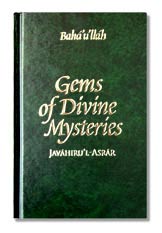
Gems of Divine Mysteries book coverFACULTY: William Collins and Nima Rafiei 

Gems of Divine Mysteries and Other Early  Tablets by Bahá’u’lláh completes the study of Bahá’u’lláh's early tablets that begins in the course on Early Mystic Writings. In this course we will focus on Gems of Divine Mysteries, a treatise that Bahá’u’lláh tells us he wrote “in reply to a seeker who had asked how the promised Mihdí could have become transformed into ‘Alí-Muḥammad (the Báb).” Part of Gems of Divine Mysteries is similar to the mystical Seven Valleys, while other parts are similar to the later-revealed Kitab-i-Iqan. Consequently, Gems of Divine Mysteries can be said to mark the transition of the proclamation of Bahá’u’lláh’s mission from mystics (mysticism) to divines (prophecy). We will also study other tablets, usually in provisional translations, including the Sura of Counsel (Surah-i-Nush); the City of Divine Unity (Madinat al-Tawḥid); the Suffering of the Exalted Letters; the Tablet of Liberation (in which Bahá’u’lláh frees an enslaved person); and the Sura of Patience (also known as the Tablet of Job), revealed on April 22, 1863, on the first day of Riḍvan.


Register for Introduction to Islam


Faculty: Susan Maneck

In Introduction to Islam we will begin with a survey of the life of Muhammad, a Manifestation of God, and a review of the origins, development, and content of the Qur’an, including the teachings and practices of Islam. We will then examine the Sunni/Shiite split over issues of succession and authority and discuss Islamic mysticism, or Sufism, and the Sufi poetic tradition. Finally, we will turn to contemporary Islam and to Islam and other religions, including the Bahá’í Faith. With ongoing anti-Islamic sentiment throughout the world, there is no better time to improve our understanding of one of the world’s most important and influential religions and to prepare for discussing it with Christian and Muslim friends and neighbors.

Paul and the New Testament Epistles is an exciting follow-up course to Jesus and the Gospels in Bahá’í and Historical Perspective. It similarly examines the New Testament Epistles and Book of Acts from historical and theological points of view. The course subject matter includes the life and times of the Apostle Paul – arguably one of the most important and controversial figures in Christianity – as well as epistolatory teachings on salvation, the Resurrection, the raising of the dead, unity in Christ, the law/Torah, the station of women, martyrdom, “the [evil] powers,” Satan, false prophets, sin, and other hot topics. The course will conclude with comparative readings of Bahá’í commentary on those same topics with a view to discovering the golden threads of unity that run through the Bahá’í and New Testament scripture.

For historical perspectives, the participants will read chapters 20 through 29 of The New Testament: A Historical Introduction to the Early Christian Writings (Bart Ehrman, Oxford University Press, 2015. Note that this is the sixth edition of Ehrman’s text and that other editions, which cover essentially the same material, may be available more cheaply). For theological perspectives, the participants will read commentary on traditional and modern Pauline theology, as well as excerpts from Light of the Kingdom: Biblical Topics in the Bahà’í Writings (JoAnn Borovicka, Bahá’í Publishing Trust, 2016). Readings are supplemented with video outlines and commentary.

This course offers remarkable flexibility, allowing participants to complete all assignments at their own pace online. For those who enjoy live dialogue, facilitators will host optional weekly Zoom meetings on Sundays from 4 to 5:30 PM Eastern Time. It is important to note that these meetings are not mandatory and that recordings of the sessions will be available on the course website for all students, ensuring that everyone can engage at their own convenience.

REGISTER HERE

Start date: Monday, Jan. 6, 2025
End Date: Sunday, Apr. 14, 2025
Price: $150 (too much? Tuition discounts available; write info@corinnetruecenter.org)

Faculty: Robert H. Stockman,  JoAnn Borovicka, and Caleb Gilleland


Register for World Order of Bahá’u’lláh: Selected Letters

Faculty: Gisu Mohadjer; Robert Stockman

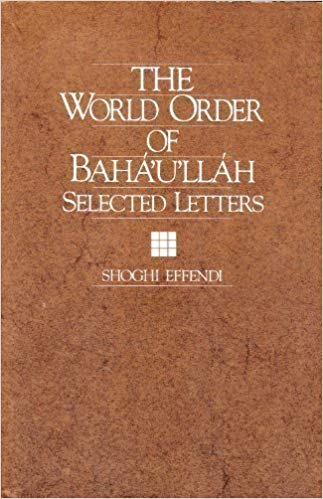
book cover, World Order of Baha'u'llah
Learn more about the Bahá’í Faith. 

The World Order of Bahá’u’lláh: Selected Letters, a compilation of letters written by Shoghi Effendi, identify the essential character and distinguishing features of the Bahá’í Faith in contrast to other political and religious systems. In studying the letters, we will examine what Shoghi Effendi identifies as the defects of the prevailing world order, the guiding principles of the Bahá’í system that will bring about World Order, and the necessary steps world leaders must take to rectify these defects. We will also study what Shoghi Effendi says about the ordeals we must traverse in order to realize a new phase in human thought and the important role that North America is to play before we reach the peaceful settlement of world affairs. This course is designed to strengthen our understanding of the times in which we live and our certainty that humankind will pass through a daunting period of world history, knowing that world peace, the dream of the great thinkers of all ages, is not only possible but inevitable.


To register: https://corinnetruecenter.org/product/writing-biographies-and-histories-recording-stories-of-people-and-places/

Writing Biographies and Histories: Recording Stories of People and Places is designed to help Bahá’ís who wish to compose a memoir about their own lives, produce a biography of a Baha’i mentor, or write the history of their local Bahá’í community. Units in the first half of the course will cover such topics as selecting a topic and settling on an audience; the philosophy and ethics of writing biographies and history; collecting oral history; research in archives and libraries and on the web; organizing notes and outlining the topic. In the second half of the course, participants will pursue a research and writing project with support and advice from the faculty. The Corinne True Center may be interested in publishing some short histories, biographies, and memoirs on its public website.

Shrine of the BabThe Writings of the Báb

Faculty: Moojan Momen, Peter Smith 

Register for this course

This course is an introduction to the principal writings of the Báb. Among the works we will study are the Commentary on the Surih of Joseph (Qayyumu’l-Asma’); tablets to secular and religious leaders; The Seven Proofs (Dala’il-i-Sab`ih); the Persian Exposition (Bayán-i-Farsi); the Arabic Exposition (Bayán al-`Arabiyyah), the Book of Names (Kitáb-i-Asma’); and the Book of Five Grades (Kitáb-i-Panj-Sha’n). Our study will be both historical and thematic: We will study the Báb’s writings in the order in which He revealed them (between 1844 and 1850), and we will also focus on selected themes—the station of the Báb, His major teachings, His announcement about Bahá’u’lláh (His prophetic successor Whom He referred to as “He Whom God will make manifest”), and the role the themes played in preparing for the revelation of Bahá’u’lláh.

This 12-week course will introduce Arabic spelling, pronunciation, and basic vocabulary to persons with no familiarity with the language. It will use the classic introductory textbook Alif Ba. It will have two 90-minute live sessions, Sundays 12:30 to 2 p.m. and Wednesdays 7 to 8:30 p.m. (both Eastern time). The students will be expected to put in about 6 hours of homework per week. Go here to read more and to register.

In this 11-week course students will be introduced to the Persian alphabet, basic grammar, spelling, pronunciation, and some rudimentary aspects of spoken Persian. We will be using The Routledge Introductory Persian Course: Farsi Shirin Ast (2nd edition) as our textbook (students should purchase a copy; https://www.routledge.com/The-Routledge-Introductory-Persian-Course-Farsi-Shirin-Ast/Shabani-Jadidi-Brookshaw/p/book/9781138496798). Classes will be held online via Zoom in two 90-minute sessions: Tuesdays, 5:00 – 6:30 PM PST (8 – 9:30 Eastern) and Saturdays, 9:30 – 11:00 AM PST (12:30-2 Eastern). Attendance is mandatory and students will be asked to complete assignments, which will be submitted to the instructor for review via email. The reading of shorter Bahá’í texts, such as prayers or The Hidden Words, will be incorporated into the course as a means to help students with their language acquisition skills.

REGISTER HERE

Dates: Tuesday, October 15, 2024 through Monday, January 6, 2025


This 12-week course will introduce Arabic spelling, pronunciation, and basic vocabulary to persons with no familiarity with the language. It will use the classic introductory textbook Alif Ba. It will have two 90-minute live sessions, Sundays 12:30 to 2 p.m. and Wednesdays 7 to 8:30 p.m. (both Eastern time). The students will be expected to put in about 6 hours of homework per week.

Robert Stockman and JoAnn Borovicka will offer Jesus and the Gospels in Historical and Baha'i Perspective. The 12-week course will use two texts, Bart D. Ehrman's The New Testament: A Historical Introduction to the Early Christian Writings (Oxford Univ. Press) and JoAnn Borovicka's Light of the Kingdom: Biblical Topics in the Baha'i Writings (Baha'i Publishing) which students should purchase. There will also be recorded videos and live Zoom sessions (probably Sundays at 4 p.m. Eastern). The course will introduce students to the historical complexity of understanding the life and teachings of Jesus Christ caused by the lack of written records and the extensive use of oral traditions over 2 generations. But in spite of those difficulties, a sacred text emerged that has guided aright billions of people over centuries. This will be a challenging course and will explore the New Testament in ways Baha'is are not used to considering.

The Dispensation of Bahá’u’lláh

Register at this link

An eagle atop the globe on the grave of Shoghi Effendi in LondonThis course is a study of Shoghi Effendi’s 1934 letter “The Dispensation of Bahá’u’lláh”, focusing on it as a foundational document for fundamental verities of the Bahá’í Faith, covering its place in Bahá’í literature, and the subtleties of Shoghi Effendi’s clarification of the historical, theological, and doctrinal realities of Bahá’u’lláh, the Báb, ‘Abdu’l-Bahá, and the Administrative Order. 

“The Dispensation of Bahá’u’lláh has been referred to as Shoghi Effendi’s own confession of faith… Without deep study of this basic document, no Bahá’í can claim to be truly knowledgeable of his or her Faith.” (David Hofman, “Shoghi Effendi, Expounder of the Word of God”, quoted in The Vision of Shoghi Effendi, p. 99.) 


Register for The Badi' Calendar

Faculty: Candace Hill, Ed Diliberto

The Bahá'í Faith has a unique calendar of 19 months of 19 days each, plus 4 or 5 days of Ayyam-i-Ha to bring the length of the year up to a full solar cycle. Through this calendar, “sacred moments are distinguished, humanity’s place in time and space are reimagined, and the rhythm of life recast.” The Universal House of Justice, in a letter dated July 10, 2014, has called “upon the Bahá'ís of the East and West to adopt . . . the provisions that will unite them in the common implementation of the Badi‘ calendar.” The House of Justice has also fixed the start of the year on the first day of spring as it occurs in Tehran. In The Badi‘ (Bahá'í) Calendar we will consider the purpose and nature of calendars in general, the organization of the Bahá'í calendar (created by the Báb and called the Badi‘ calendar), the spiritual significance of the names of “the periods and cycles, months and days” in the calendar, and the purpose and timing of Bahá'í holy days. We will also compare the Bahá'í calendar to the Jewish, Christian, and Islamic calendars.

Gifts of the Spirit: The Spiritual Practice of Creative Writing

illustration of a pen and artFACULTY: Sandra Hutchison

In Gifts of the Spirit: The Spiritual Practice of Creative Writing, students will work one on one with a mentor who is a published author and experienced editor to design and complete a creative project in the form of poetry, fiction, a personal essay, or a memoir. In preparation for embarking on this project, students will explore various practical and aesthetic questions relating to writing, such as 1) How should one approach creative work as a writer? 2) What is the relationship between writing and spiritual practice? 3) What kinds of subjects should one choose to write about? 4) How should one use language? 5) What is the role of the writer in the community? and 6) How does one live a productive writing life? The goal of this course will be to complete a literary project and also to understand what kind of work must be done in order to achieve publication. Some of the work produced in this course may be considered for the online journal of the arts at http://www.elixir-journal.org/ and for publications of the Wilmette Institute.

Register for The Secret of Divine Civilization and Ottoman Reform

Faculty: Necati Alkan

In The Secret of Divine Civilization we will study `Abdu'l-Bahá’s first extensive description of Bahá’í social teachings, reading it slowly over a period of seven weeks. Elaborating on principles that Bahá’u’lláh enunciated in His tablets to the kings and leaders of the world, the treatise describes the true nature of civilization and provides a blueprint for the “future reorganization of the world.” To develop the theme of universal peace, honest government, and religion as the true bases of world order, `Abdu'l-Bahá redefines the Islamic tradition that a learned person "must guard himself, defend his faith, oppose his passions and obey the commandments of his Lord." Leaders, in particular, are called to a new standard of honesty and trustworthiness, a theme of particular interest during any election cycle. This course will thus look at the complementary processes of personal transformation and social development, leading to a reorganization of the world. It will also examine the book as an early example of public discourse and consider how we can use it to improve our own efforts in public discourse.